
9 October 2026 · Prestige Door Services
If you are pricing a door for a warehouse, factory, shopfront or storage unit, you will quickly come across two terms: commercial roller doors and industrial roller doors. They look similar from the outside, but they are designed for very different workloads.
Choosing the wrong one usually shows up later as premature wear, slow operation or a door that simply cannot keep up with the site. Here is how the two differ, and how to decide which suits your building.
What is a commercial roller door?
Commercial roller doors suit premises that need reliable access and security without constant heavy use. Think shopfronts, small warehouses, storage facilities, car parks and unit complexes.
They are typically built for moderate daily cycles, sized for standard commercial openings, and can be manual or motorised depending on how often the door moves.
What is an industrial roller door?
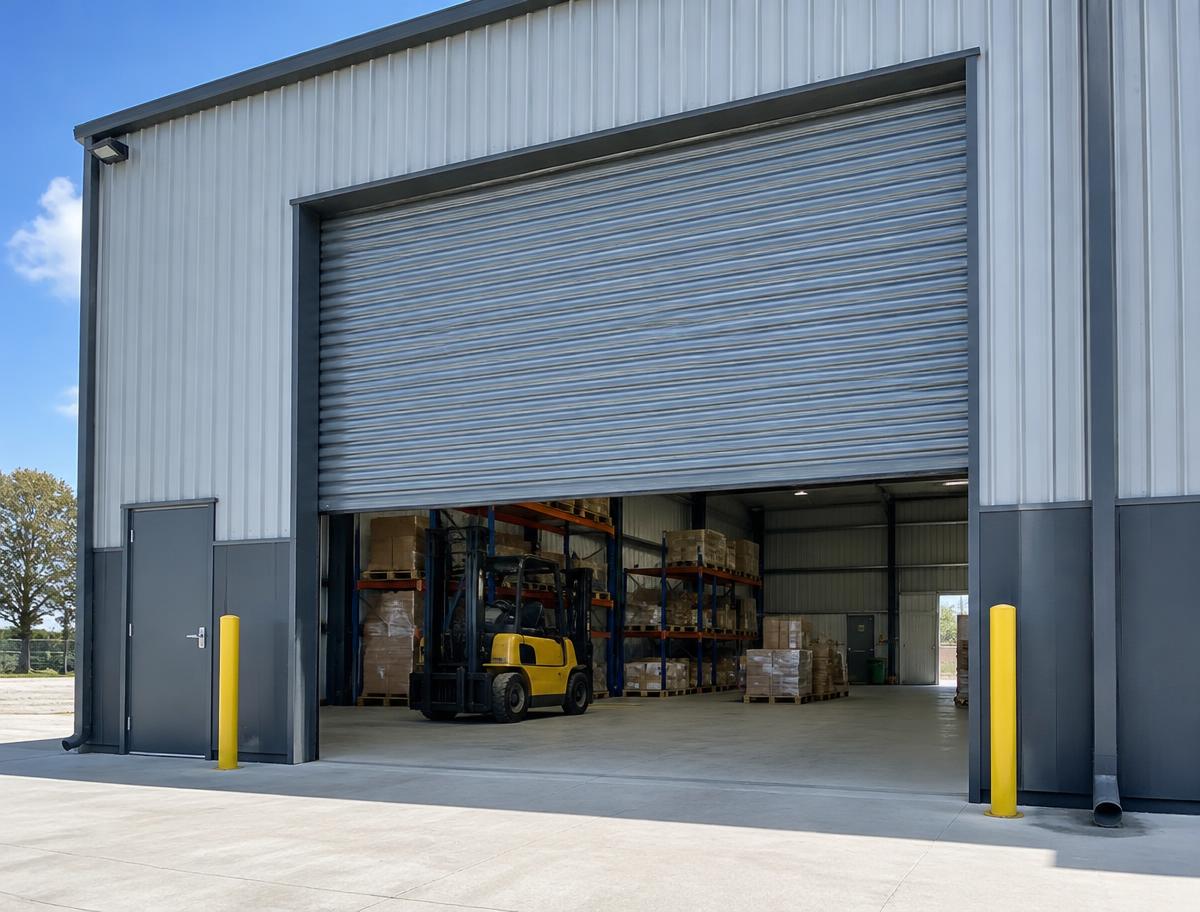
Industrial roller doors are built for bigger openings and harder work. Factories, distribution centres, loading docks and workshops often need doors that open and close many times a day, span wide or tall openings, and cope with wind load, dust and knocks from forklifts.
That means heavier gauge curtain material, stronger guides and drums, and motors rated for a higher duty cycle so the door can run all day without overheating or wearing out early.
The main differences at a glance
- Opening size: industrial doors cover wider and taller openings
- Duty cycle: industrial doors are rated for far more open and close cycles per day
- Curtain and guides: industrial doors use heavier materials for strength and wind resistance
- Motor sizing: industrial operators are built for continuous work, not occasional use
- Speed and safety features: busy sites often need faster operation and extra safety devices
Which one does your site need?
Start with how the door will actually be used. A door that opens a few times a day for deliveries has very different needs to one that cycles every few minutes on a loading dock.
- How many times a day will the door open and close?
- How wide and high is the opening?
- Is the opening exposed to wind or weather?
- Do forklifts or trucks pass through, and how fast do they need to move?
- Does the door need insulation, ventilation or vision panels?
Our guide to choosing the right door for your warehouse, factory or shopfront walks through these questions in more detail.
Getting the specification right
The right answer comes from measuring the opening and understanding the site, not from a catalogue. We supply and install commercial doors across Brisbane and industrial doors for warehouses, factories and workshops, and every job starts with a free measure and quote.
If your existing door is struggling, it may not need replacing. Our roller shutter repairs team can assess whether a repair, a new motor or a full replacement makes the most sense.
Can a commercial roller door be used on an industrial site?
It depends on the workload. A commercial door on a high-cycle industrial opening will usually wear out early. Matching the door to the number of daily cycles and the opening size is what matters.
Are industrial roller doors always motorised?
Almost always, yes. The size and weight of an industrial curtain makes manual operation impractical, and the motor is sized to the door and its duty cycle.
How much does a commercial or industrial roller door cost?
It depends on the opening size, materials, motor, access and any extras like insulation or safety devices. We provide a free measure and quote so the price is based on your actual site.